Metamask

Portfolio

METAMASK Portfolio
Evolving MetaMask from a wallet into a platform for managing, transacting, and discovering across Web3.
MetaMask was evolving beyond a wallet into an ecosystem of financial products. I helped establish Portfolio as the platform that could bring those experiences together, creating a scalable foundation for users to understand, manage, and act on their assets across Web3.

As a founding designer, I worked across product strategy, information architecture, interaction patterns, and visual systems. I partnered with product, engineering, research, content, and designers across adjacent teams to establish foundations that could support both the initial product and the broader MetaMask ecosystem as it evolved.
ROLE
Founding Designer
Scale
30M+ MONTHLY ACTIVE USERS ACROSS A GLOBAL WEB3 ECOSYSTEM
Timeline
~2 years
Platforms
Web, Mobile (iOS & Android)
Focus
Platform Strategy, Design Systems, Information Architecture, Financial UX
Team
Product Design, Product Management, Engineering, Content Design, Research
Responsibilities
Product Strategy, Information Architecture, Design Systems, UX, UI, Platform Design
THE CHALLENGE
MetaMask’s growing ecosystem introduced a structural problem. Assets, accounts, networks, and financial actions were expanding across separate experiences, making it increasingly difficult for users to understand their holdings or navigate between products. Portfolio created an opportunity to establish a coherent layer across that complexity rather than continuing to add disconnected features.
A HOME FOR THE FULL PORTFOLIO
MetaMask began as a browser extension and mobile wallet designed primarily for accessing web3 and completing transactions. As users accumulated more assets across accounts, networks, and applications, understanding everything they owned required moving between disconnected views and external products. Portfolio created a dedicated place to bring that activity together, giving users a clearer picture of their holdings and more direct ways to manage and act on them. For MetaMask, it also created an opportunity to evolve beyond a transactional wallet into a broader platform users could return to for managing their crypto.
Defining the Platform
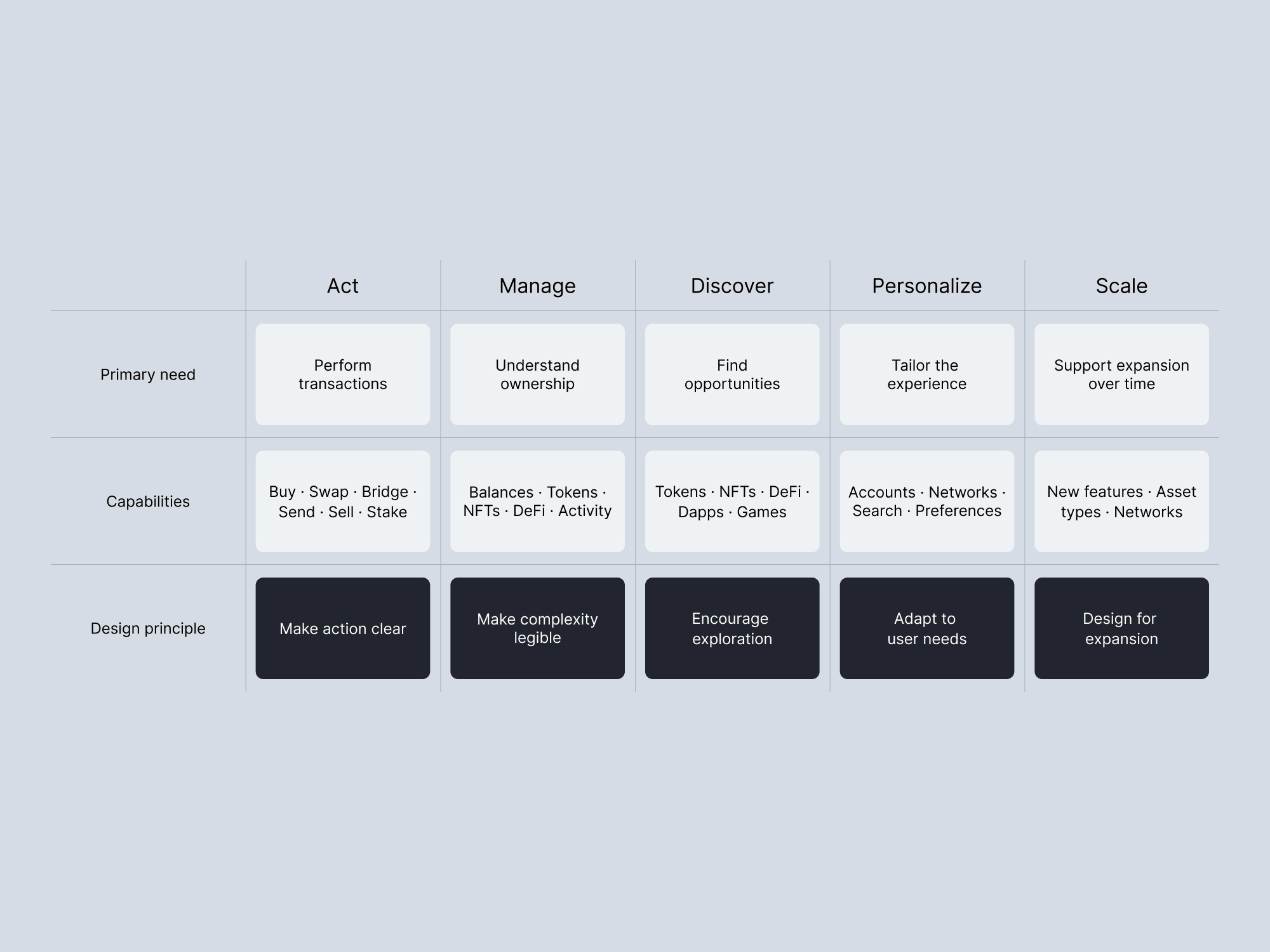
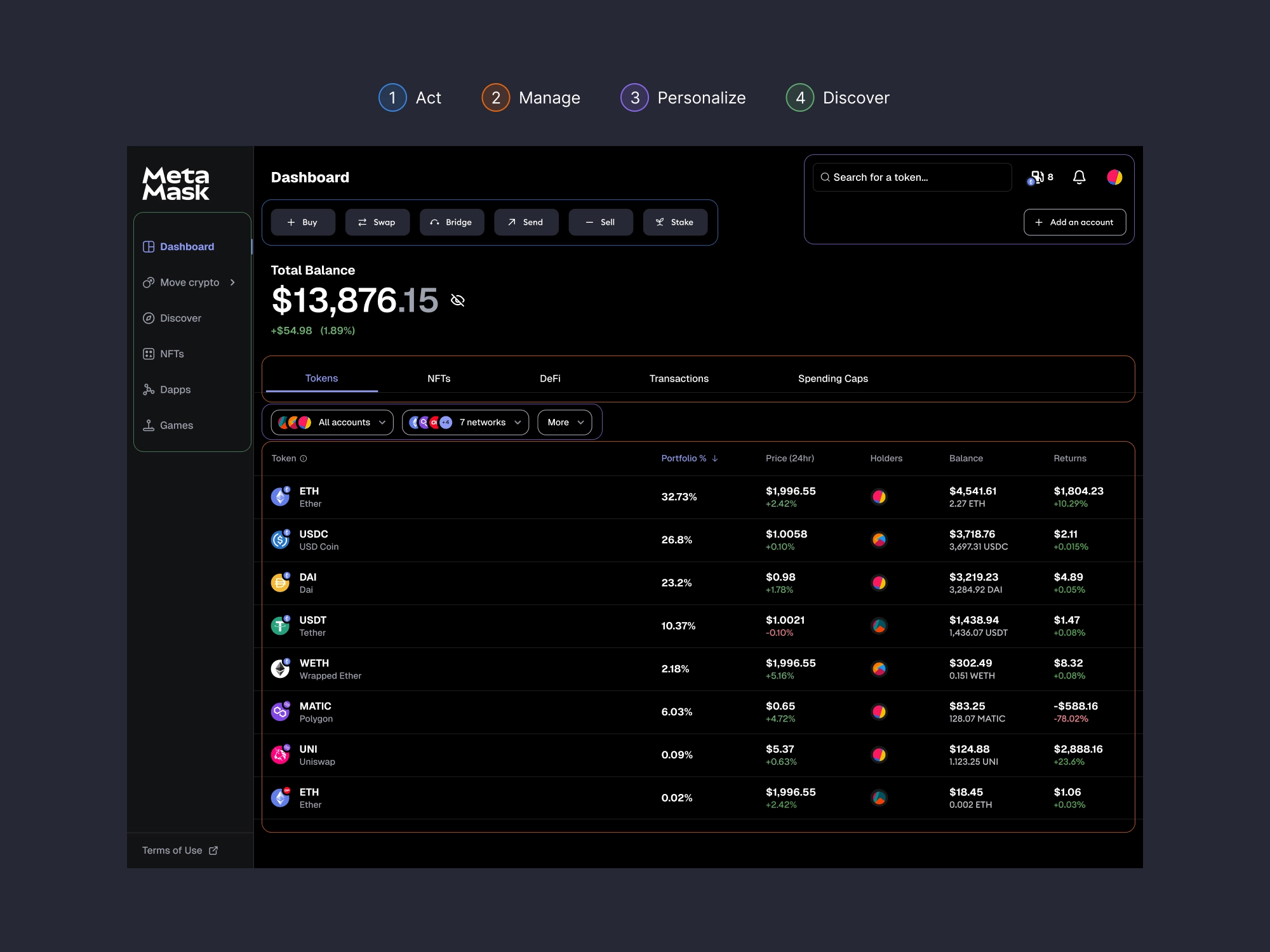
Before designing individual features, I defined a shared product model for how Portfolio could grow. I organized the ecosystem around five core needs: act, manage, discover, personalize, and scale, connecting each to the capabilities and design principles that would guide the platform as new features, networks, and use cases emerged.
Establishing the Foundation
Consistency became a prerequisite for scale. I established a shared design system of variables, tokens, components, and patterns that aligned design and engineering, accelerated product development, and gave teams a foundation for extending the platform without fragmenting the experience.
DESIGNING FOR VISUAL CONSISTENCY
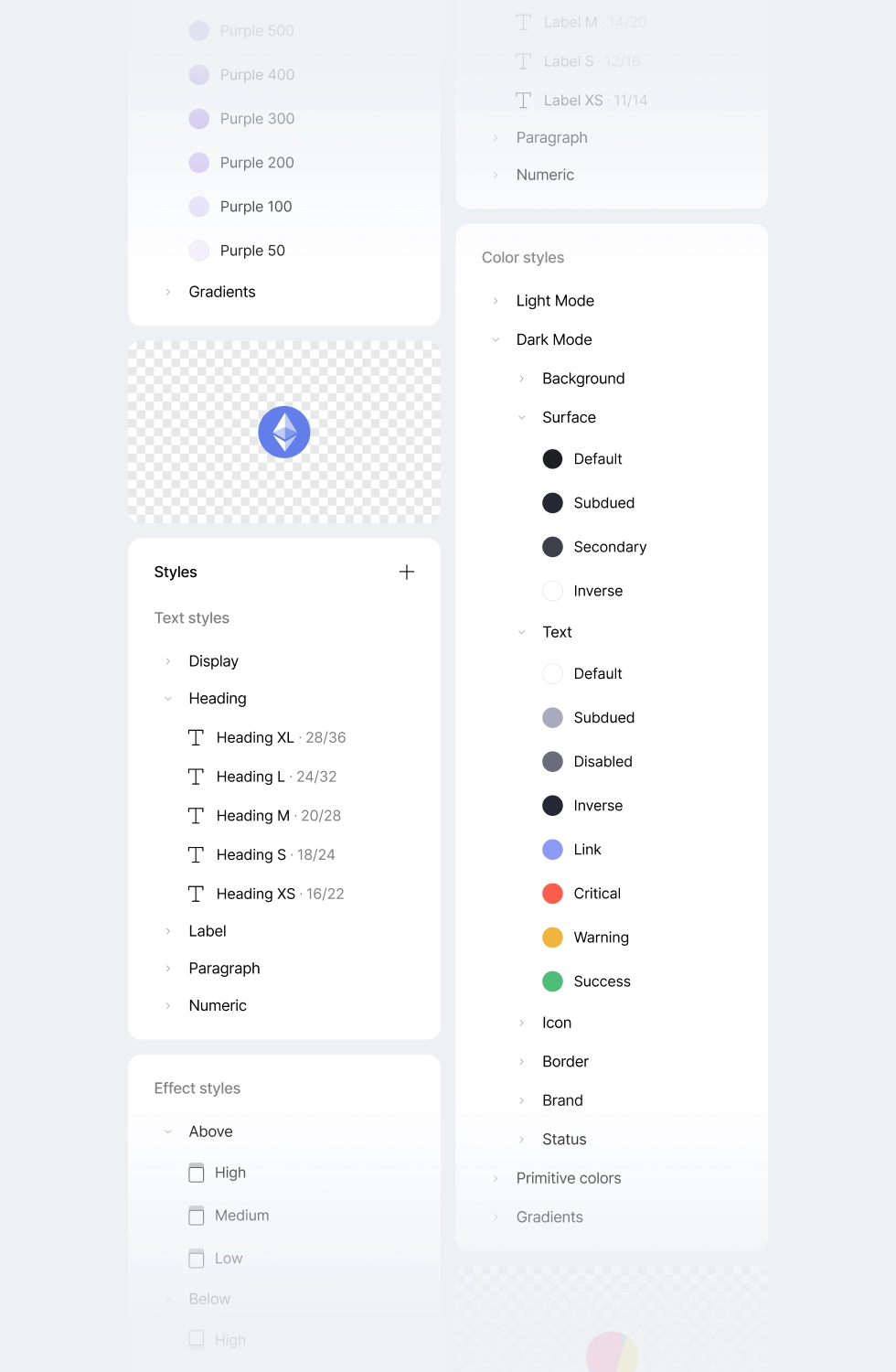
Color and typography formed the visual foundation of Portfolio. Primitive values were mapped to semantic tokens based on purpose and context, allowing the system to maintain hierarchy, accessibility, and brand expression across themes and surfaces. This structure also gave design and engineering a shared language, making global changes easier to manage as the product evolved.
BUILD ONCE, reuse EVERYWHERE
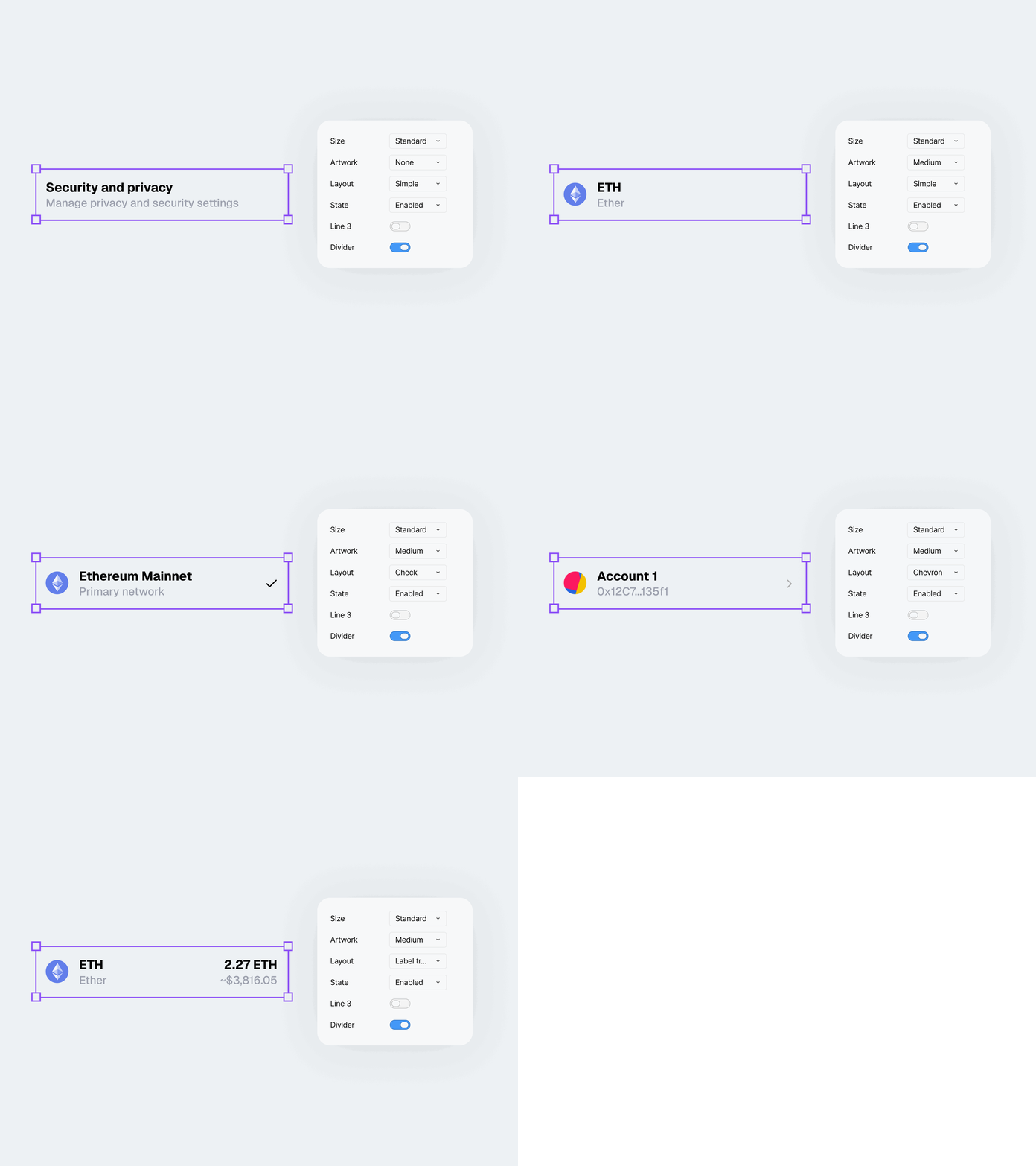
Common UI elements like buttons, inputs, navigation, list items, and cards were built as reusable components, with variants and states that could adapt to different contexts. This allowed updates to be made once and reflected across the product, esssentially helping teams work faster and maintain consistency.
CONSISTENCY ACROSS EVERY MODE
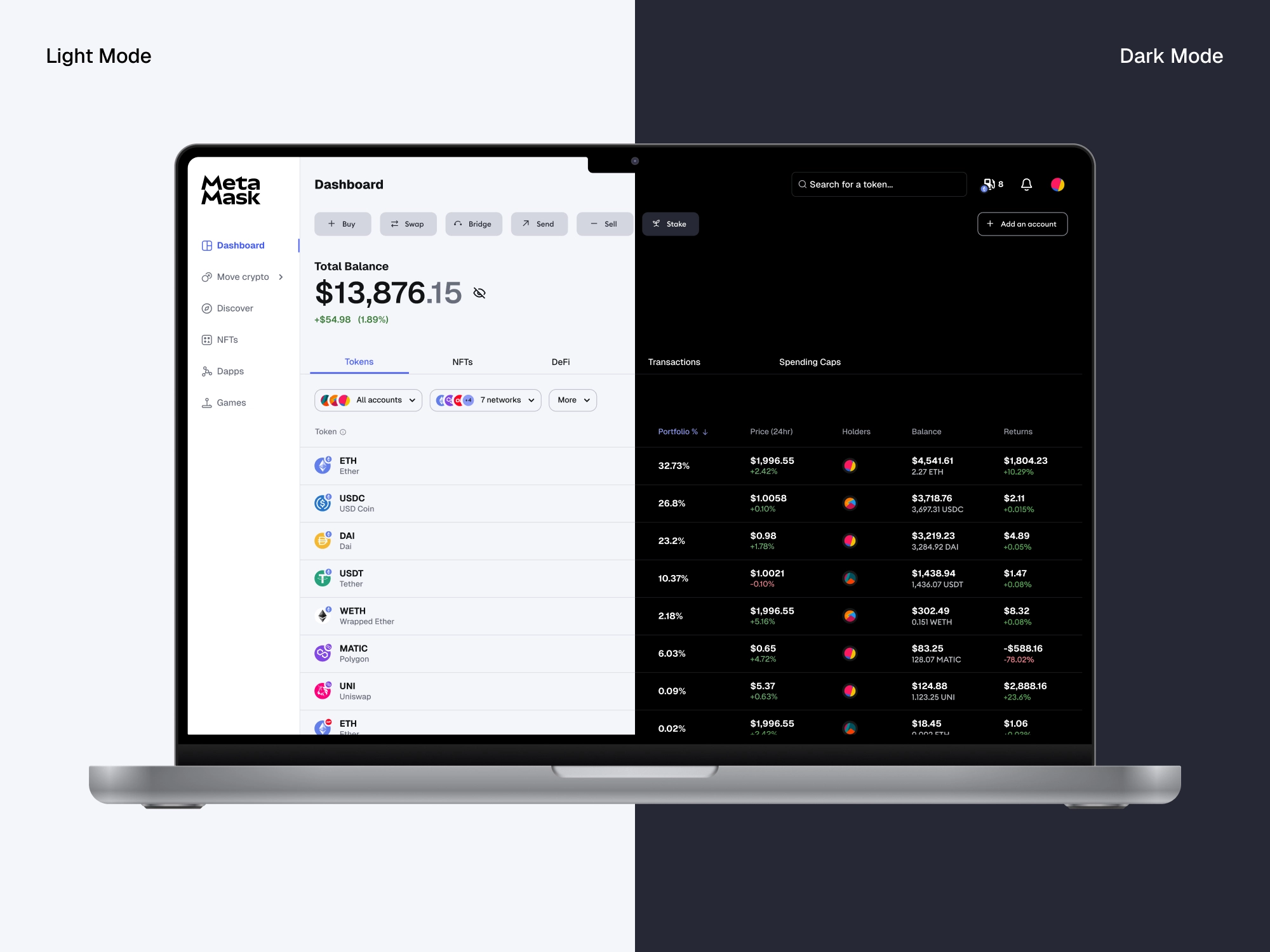
Since Portfolio could be used throughout the day and across different environments, we supported both light and dark themes rather than designing for a single viewing condition. Theming was built into the foundation using shared color rules, allowing the UI to adapt while being mindful of preserving the same hierarchy, readability, accessibility, and visual consistency across both light and dark mode.
STRUCTURING THE ECOSYSTEM
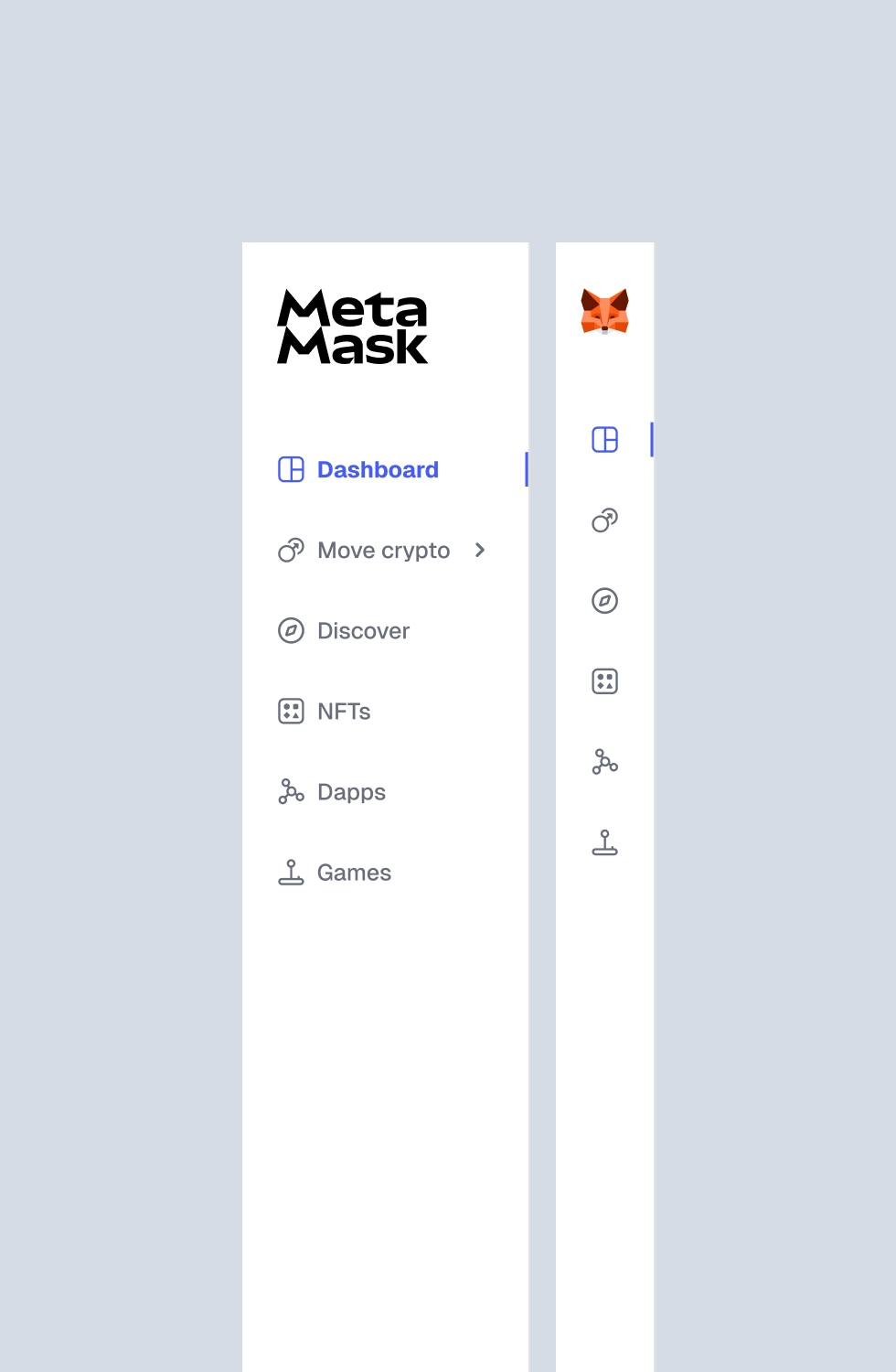
As the product expanded, the framework became its backbone. I translated it into a clear product architecture that brought transactions, asset management, personalization, and discovery into one connected experience, while creating clear paths for users as the platform became more complex.
FROM FRAMEWORK TO PRODUCT
The framework gave us a shared way to evaluate where new capabilities belonged before they entered the UI. Instead of letting the navigation mirror individual teams or product launches, each capability could be placed according to the user need it served. This created a more predictable information architecture for users while giving teams a common structure for evolving Portfolio as the ecosystem became more complex.
Act
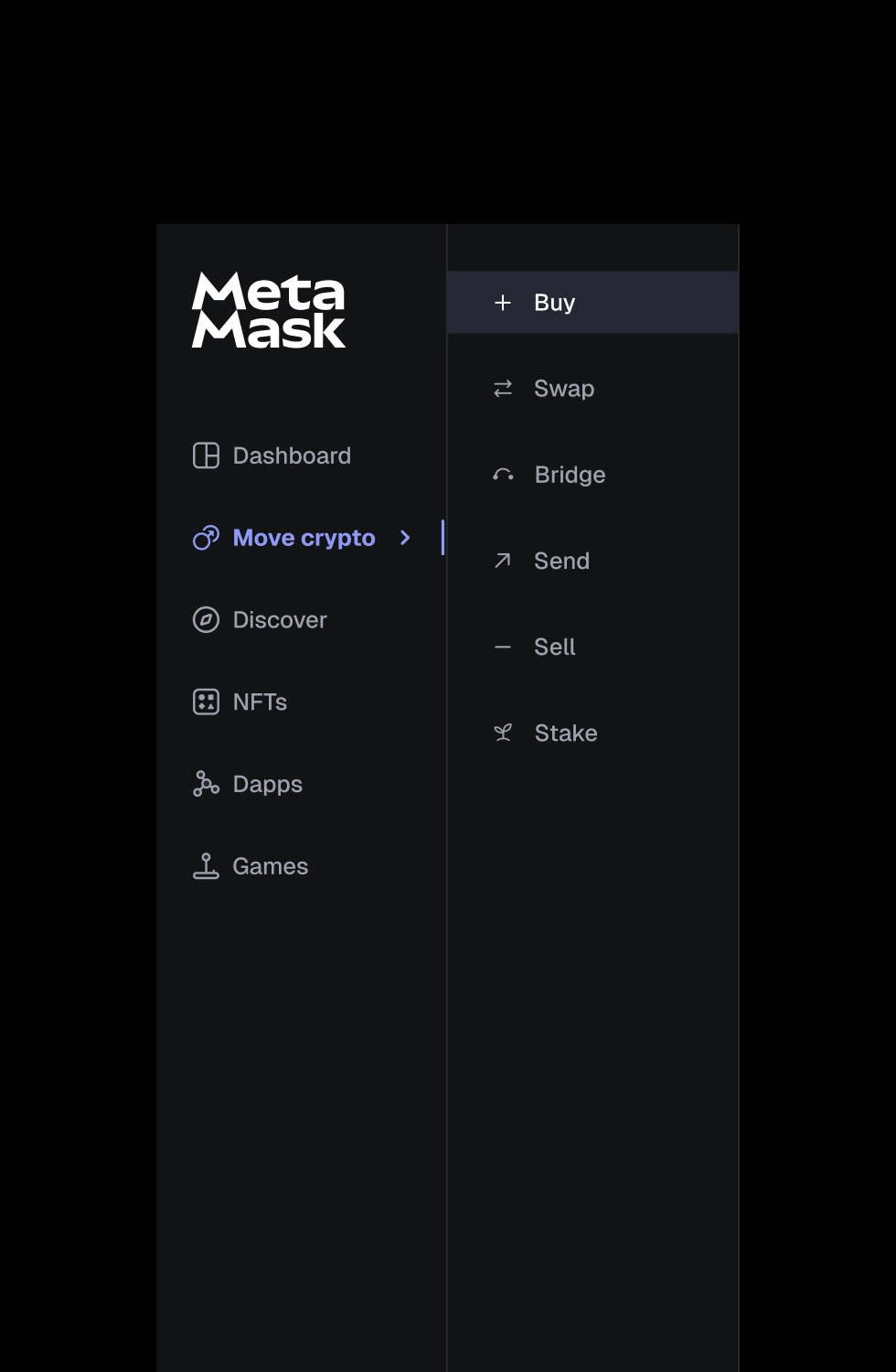
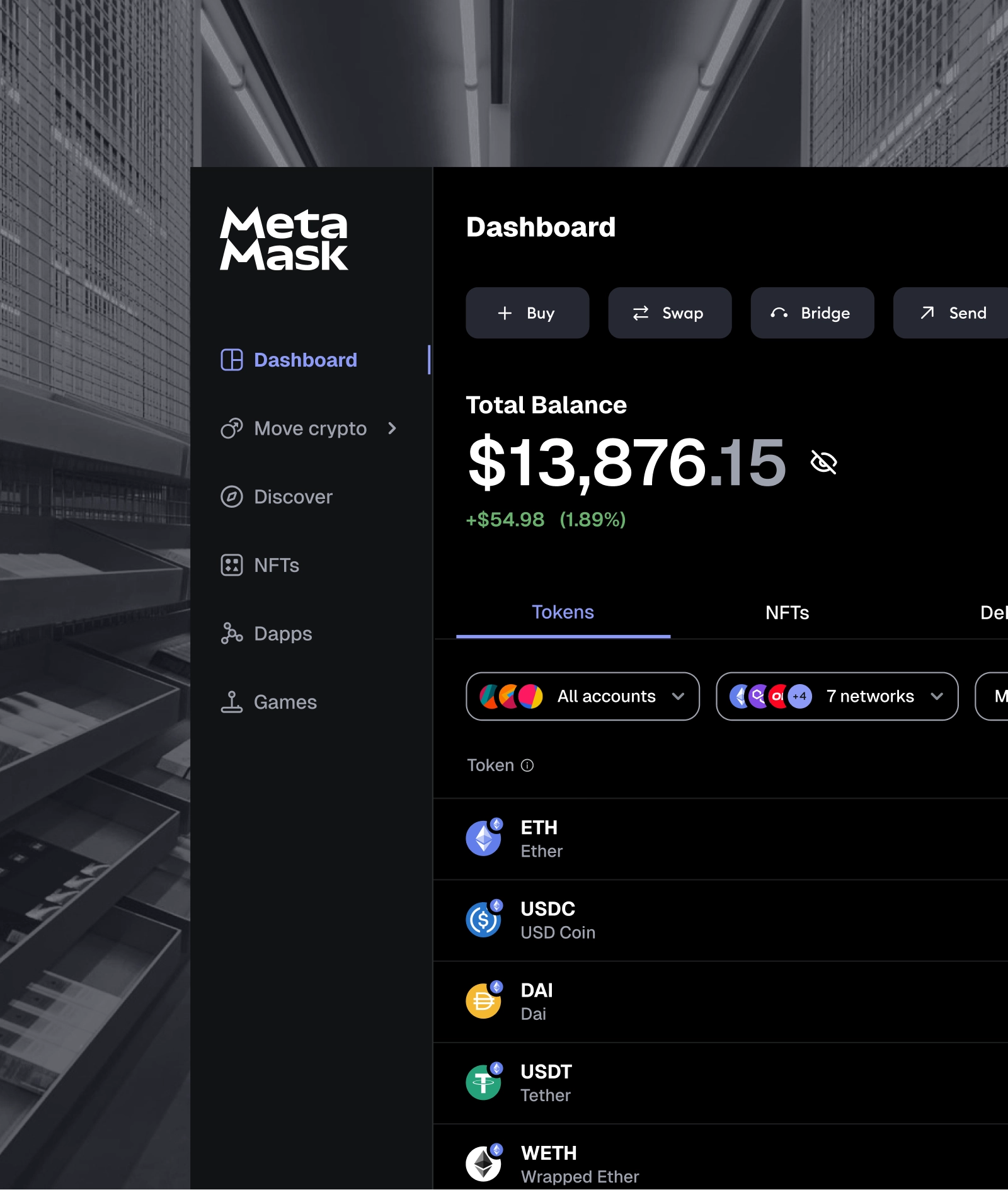
By bringing core transactions into Portfolio, we connected asset visibility with the actions users needed to acquire, exchange, move, and use their crypto, turning Portfolio from a monitoring experience into an active financial platform.
ONE PLATFORM FOR MANY TRANSACTIONS
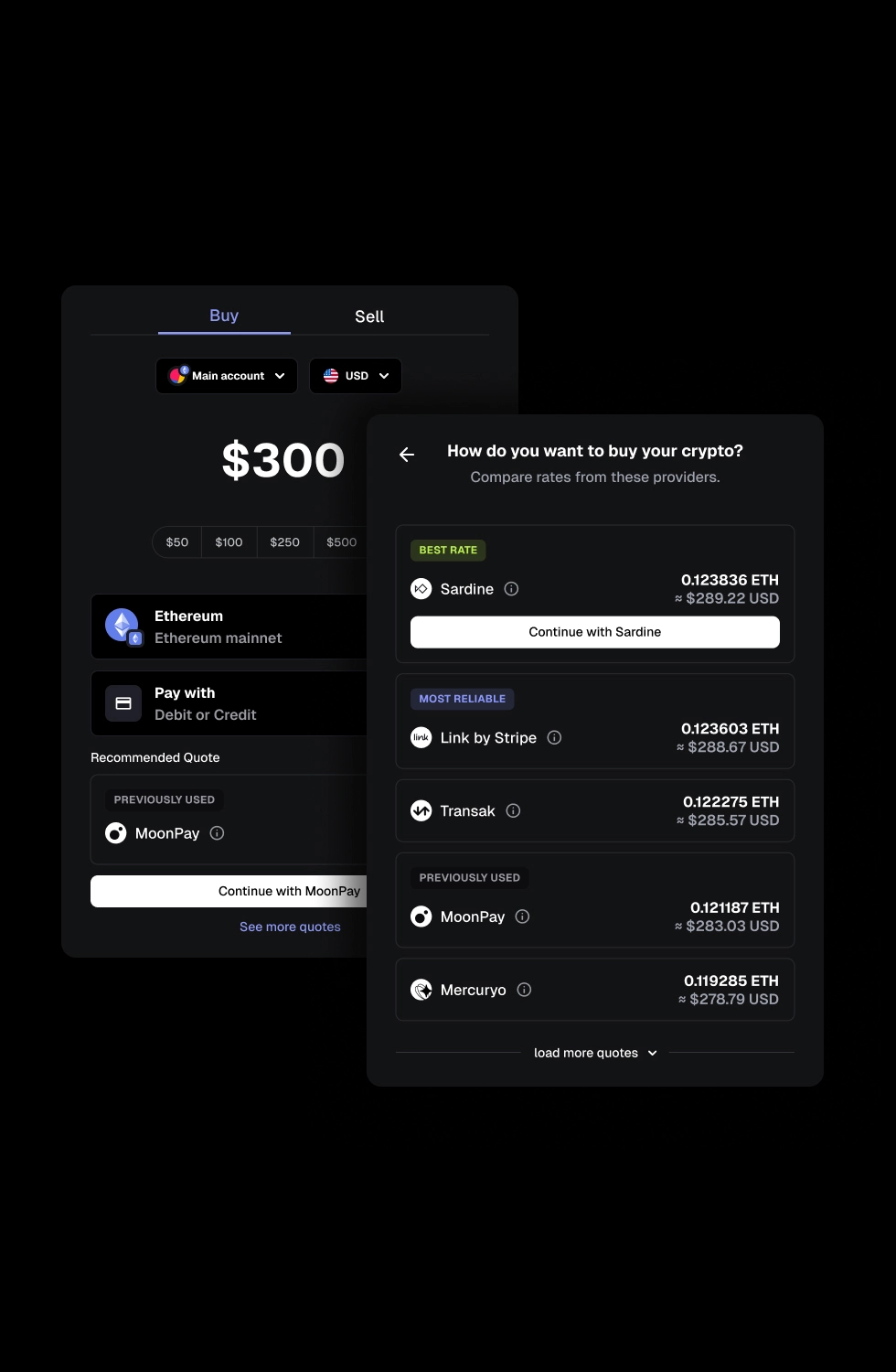
Buy, Swap, Bridge, Stake, and Send were built by different teams, but needed to work together as one Portfolio experience. Alongside designing end-to-end experience for Buy & Sell, I created the structure these features could plug into and worked with their designers to bring each workflow into the platform. Although they served different user needs, each followed a similar interaction pattern: selecting an asset, entering an amount, reviewing details, and confirming an action. These shared patterns gave us a foundation for creating a more connected experience across independently built products.
Manage
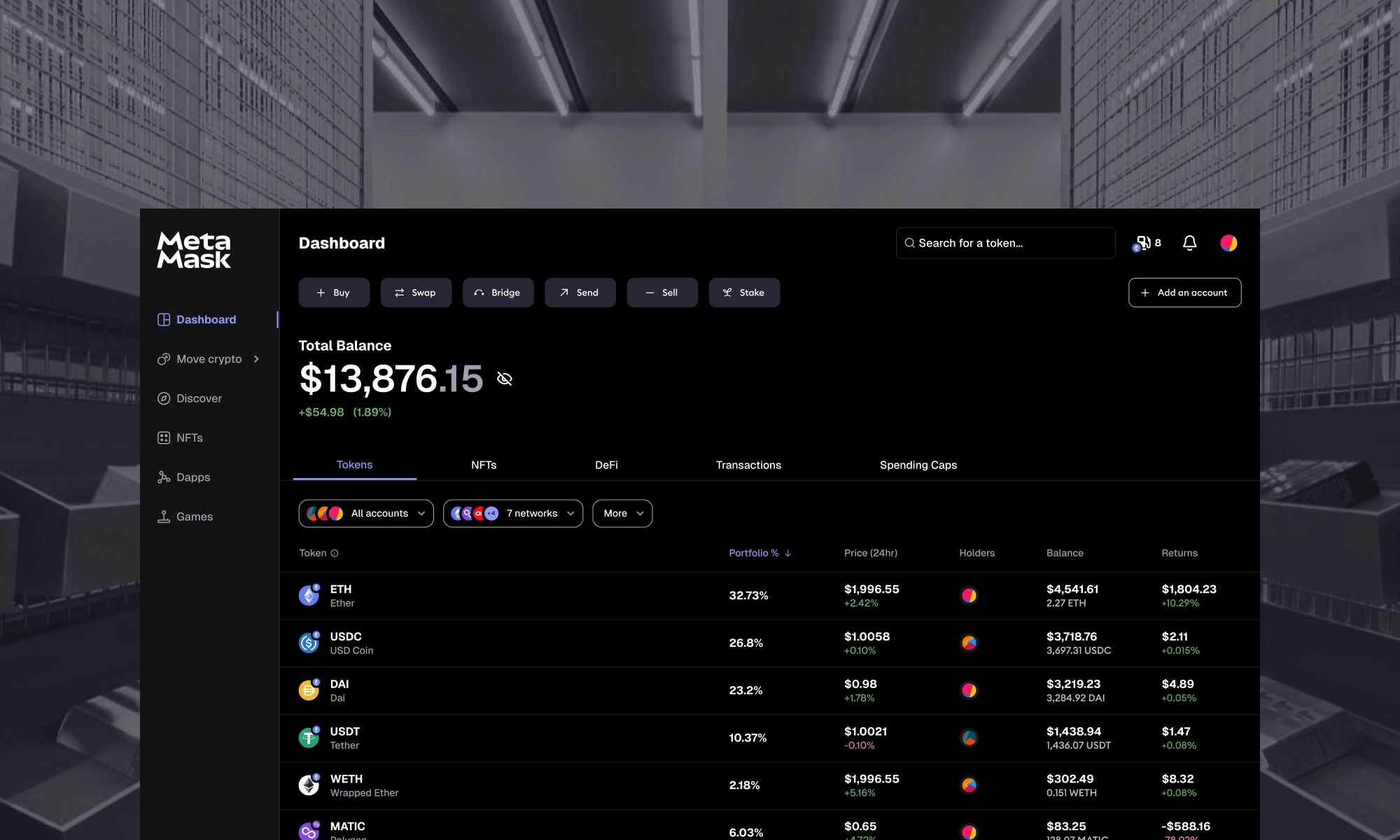
Managing assets starts with understanding them. Portfolio brought balances, performance, activity, and asset details into one place, giving users the visibility to make informed decisions and manage their crypto with confidence. By making Portfolio useful beyond individual transactions, we created more reasons for users to return and rely on it over time.
Manage
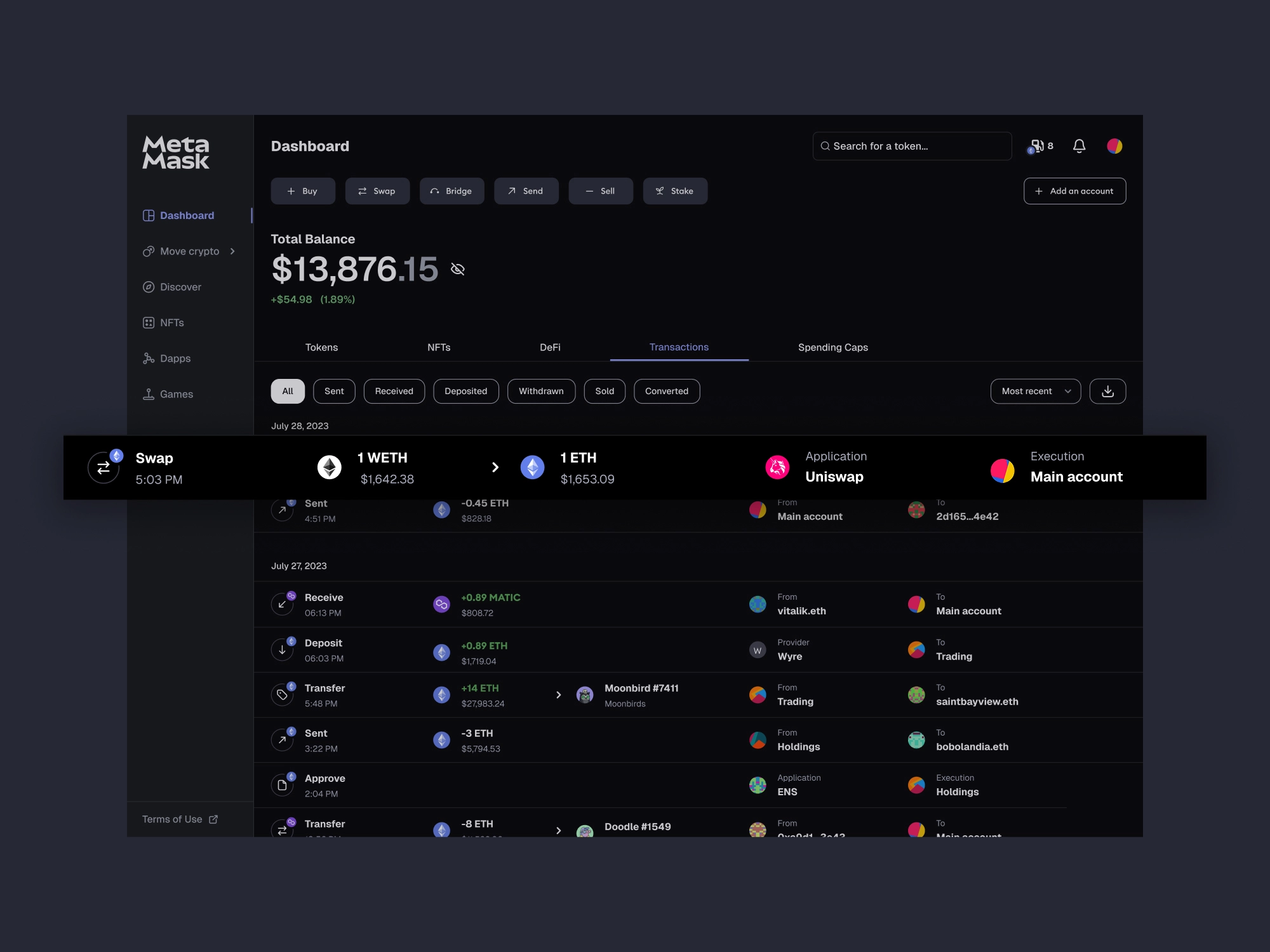
A key part of managing a portfolio is understanding the activity behind it. Transactions became a strong example of how we brought that visibility into one cohesive experience. I designed the transaction experience around a consistent information architecture, bringing activity across Buy, Sell, Swap, Bridge, Send, Receive, and other interactions into one place. Details adapted to each transaction, including assets, values, accounts, applications, and other relevant information, while the underlying structure remained consistent. Working with each product team ensured every transaction type surfaced the right information within that structure, making activity easier for users to scan, filter, and understand across Portfolio.
Personalize
As individual portfolios grow, not every asset, account, or network carries equal importance. We explored ways for users to shape the interface around what mattered to them while keeping those preferences within a consistent underlying structure.
COMPLEXITY THAT SCALES WITH THE USER
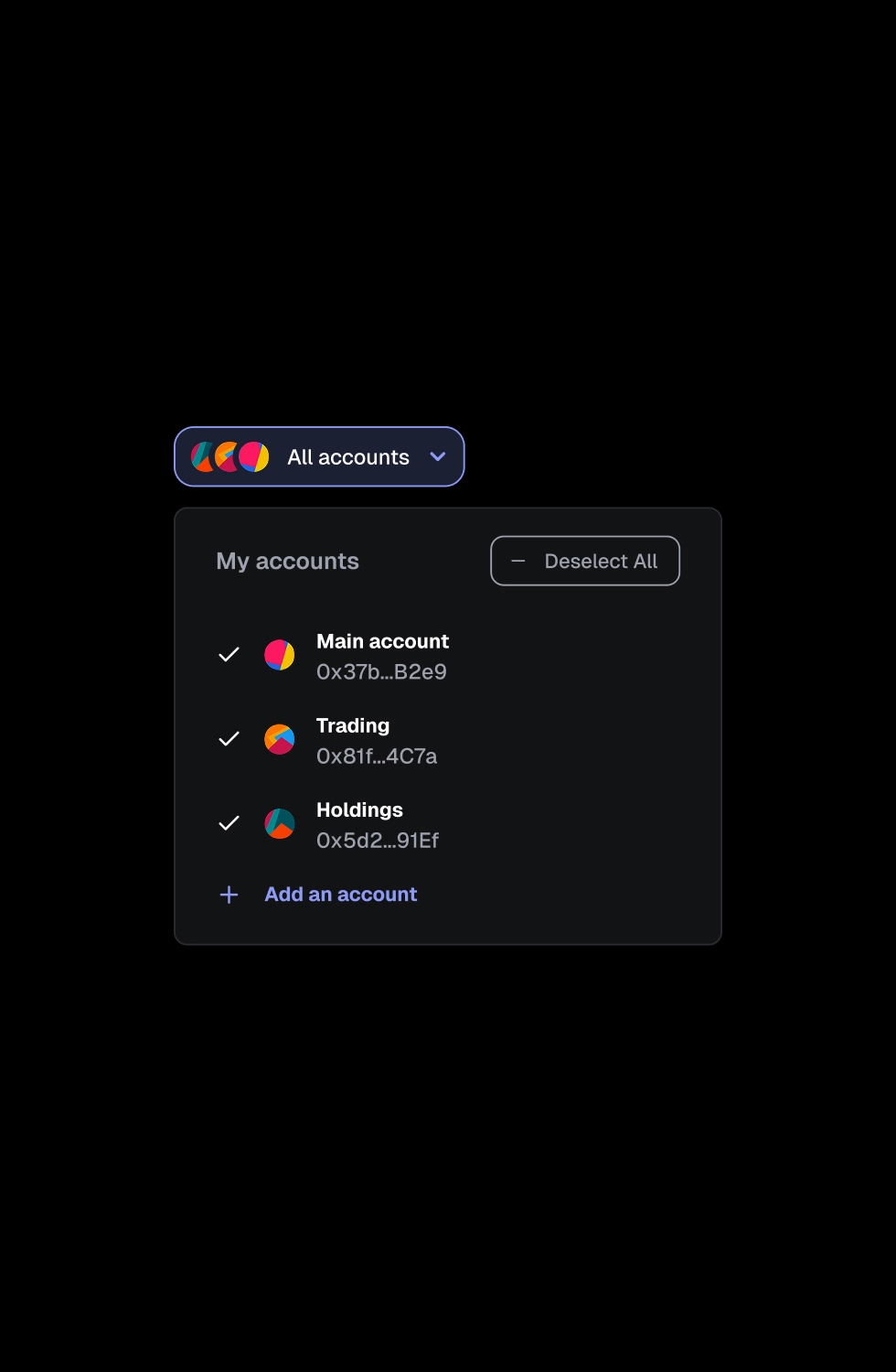
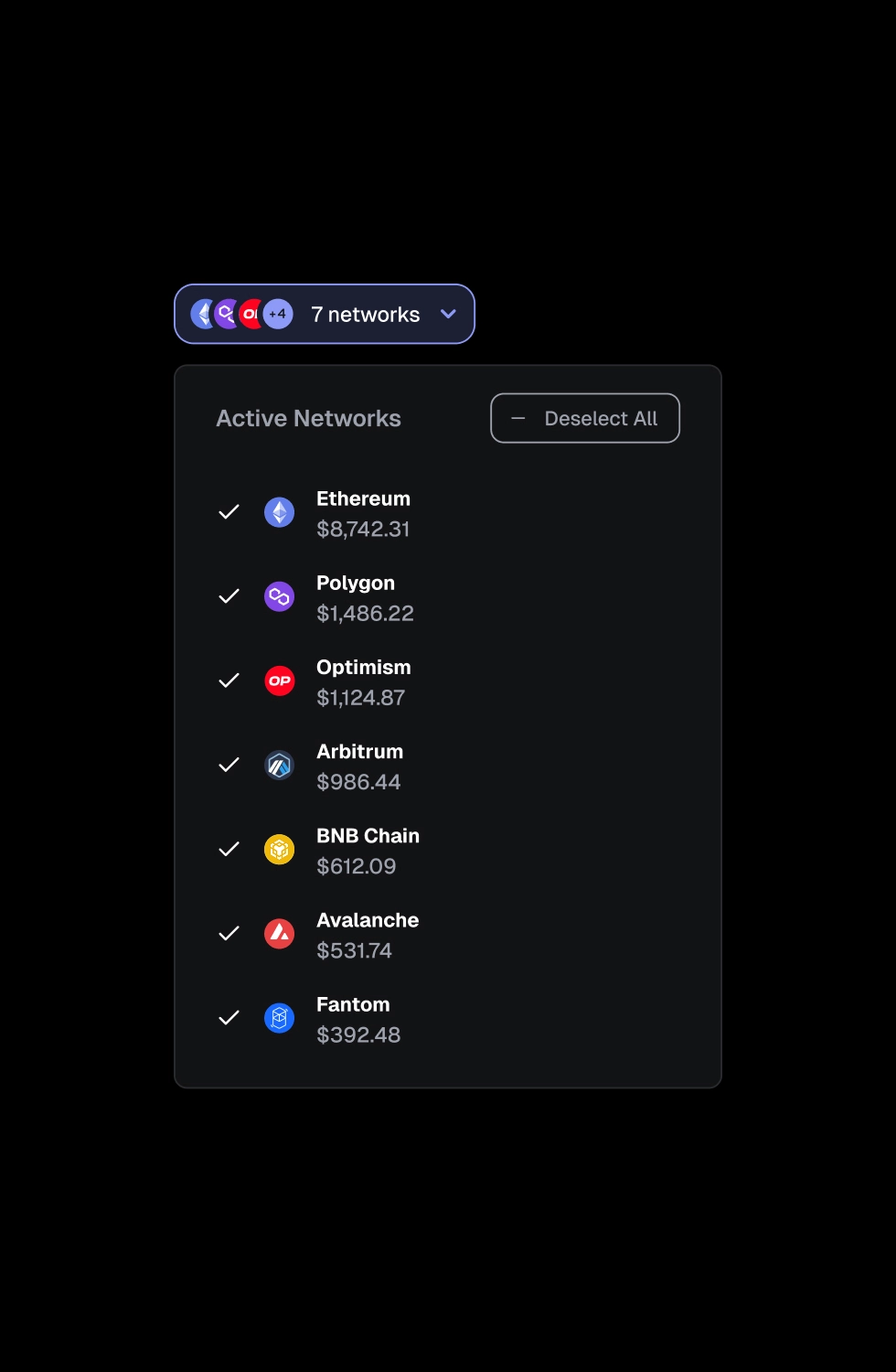
From supporting a single account and a handful of networks to multiple accounts and an expanding network ecosystem, the experience needed to adapt with it. I designed account and network controls that let users decide what they wanted to view and manage, rather than forcing everything into a fixed portfolio. This flexibility kept Portfolio approachable for newer users while giving more advanced users the control needed to manage extensive activity across accounts and networks, reinforcing the autonomy at the core of MetaMask’s self-custodial experience.
Discover
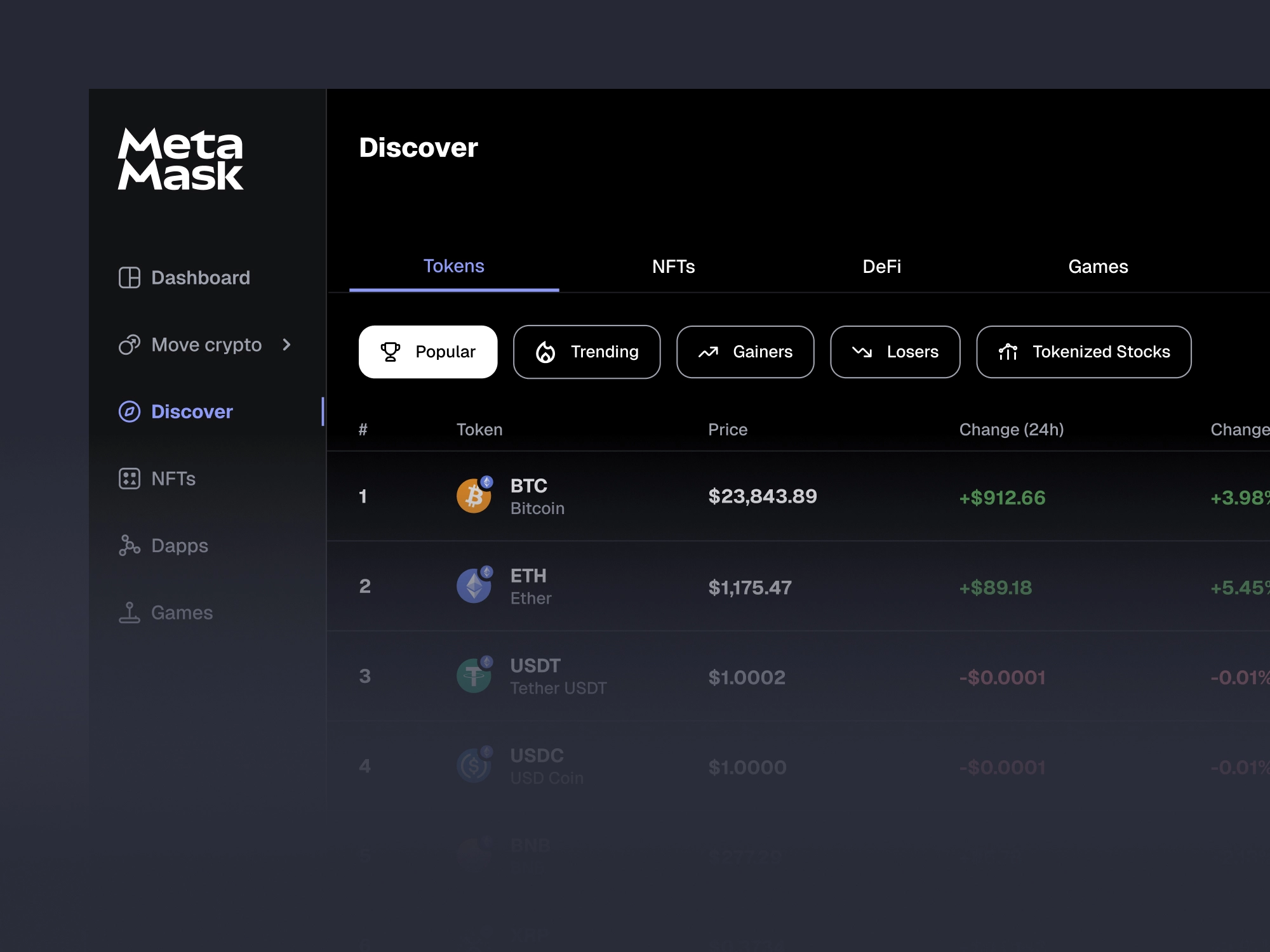
Portfolio also became a destination for discovering what an asset could do. Instead of isolating capabilities into separate destinations, we could surface relevant opportunities in context, connecting users to actions and products from the assets they already owned.
FROM HOLDING TO EXPLORING
Managing a portfolio also meant helping users understand what they could do next. Discovery brought tokens, NFTs, DeFi, dapps, and other opportunities into the same experience, turning Portfolio from a place to monitor assets into a starting point for exploring and using them.
Reflection
Portfolio grew from a new product into a core foundation for MetaMask’s expanding ecosystem. Its lasting impact wasn’t any single feature, but the shared systems and structures that allowed new products, teams, networks, and use cases to enter the platform without fragmenting the experience. Building that foundation changed how I approach product design at scale: solve the immediate problem, but design the system that makes the next ten easier to solve.